
Why Are Most PCBs Green? The Engineering Truth Behind the Color
If you’ve ever cracked open an electronic device, you’ve probably noticed one thing: most circuit boards are green. But have you ever stopped to ask why?
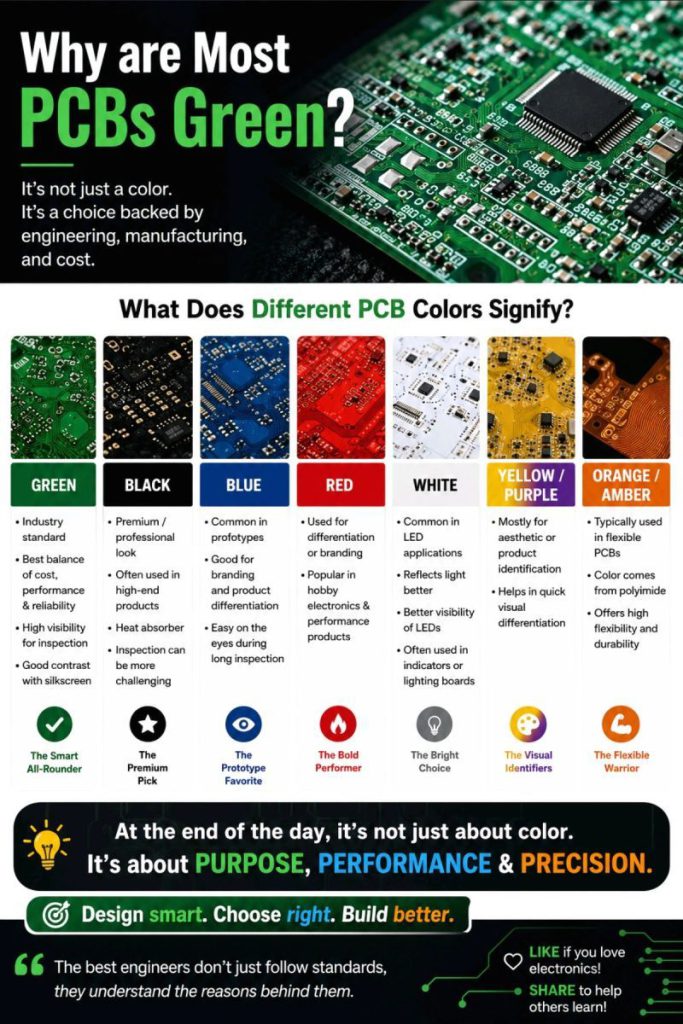
It turns out, it’s not just about looks. The classic green color is a result of years of engineering evolution—optimized for manufacturing speed, cost, and making it easier for engineers to spot defects during inspection.
But Green Isn’t the Only Player
While green is the industry workhorse, other colors bring their own flair and function to the table:
- Black: The choice for sleek, premium, and high-end products.
- Blue: Often seen in prototypes or to match specific branding.
- Red: A favorite for performance electronics.
- White: Essential for LED lighting applications.
- Yellow/Orange: Typically used for flexible PCBs.
Why It Matters
This is what makes hardware design so interesting. Even the color of the board tells a story about function, cost, and engineering constraints. It’s about understanding the “why” behind the design.
Let’s Chat!
Do you have a favorite PCB color? Do you prefer the classic green or the modern look of black? Drop your thoughts in the comments!